

For a relatively small country, Costa Rica holds a fortune when it comes to wildlife opportunities and fantastic nature. Anyone with a trained eye for eco-friendly travel and rainforest adventures has likely considered a trip to this lush paradise in Central America. Costa Rica engages all of our senses, a jewel box of iridescent hummingbirds, purple orchids, and neon-lit parrots, with a soundtrack of soul-stirring costumes, howls, talks, and calls throughout the jungle.
Now entering: Monteverde Cloud Forest
Above the mantle of the misty rainforest, mountains rise above the clouds. Temperatures begin to drop about 3,000 feet and the warm air from the forests below turns into an ethereal mist. Trees covered with moss and lichen add to the Lord of the rings aura. This is a cloud forest - or in Spanish, bosque nuboso. Specifically, the Monteverde Cloud Forest.
Here, on top of the Costa Rica continental divide at the North and South American bottleneck, mist feeds plants and trees, which then release that moisture into small streams, which flows into larger streams and rivers. Think of a cloud forest like a sky sponge, or a living aquifer. This spongy effect is considered sacred by many civilizations, including the indigenous peoples of Luzon in the Philippines, who vehemently opposed deforestation in their area.
Cloud forests are found all over the world, including Panama, Pakistan, Cambodia and, of course, Costa Rica. Tell everyone that these rare forests cover nearly 1% of the world's forests in tropical and subtropical mountain environments.
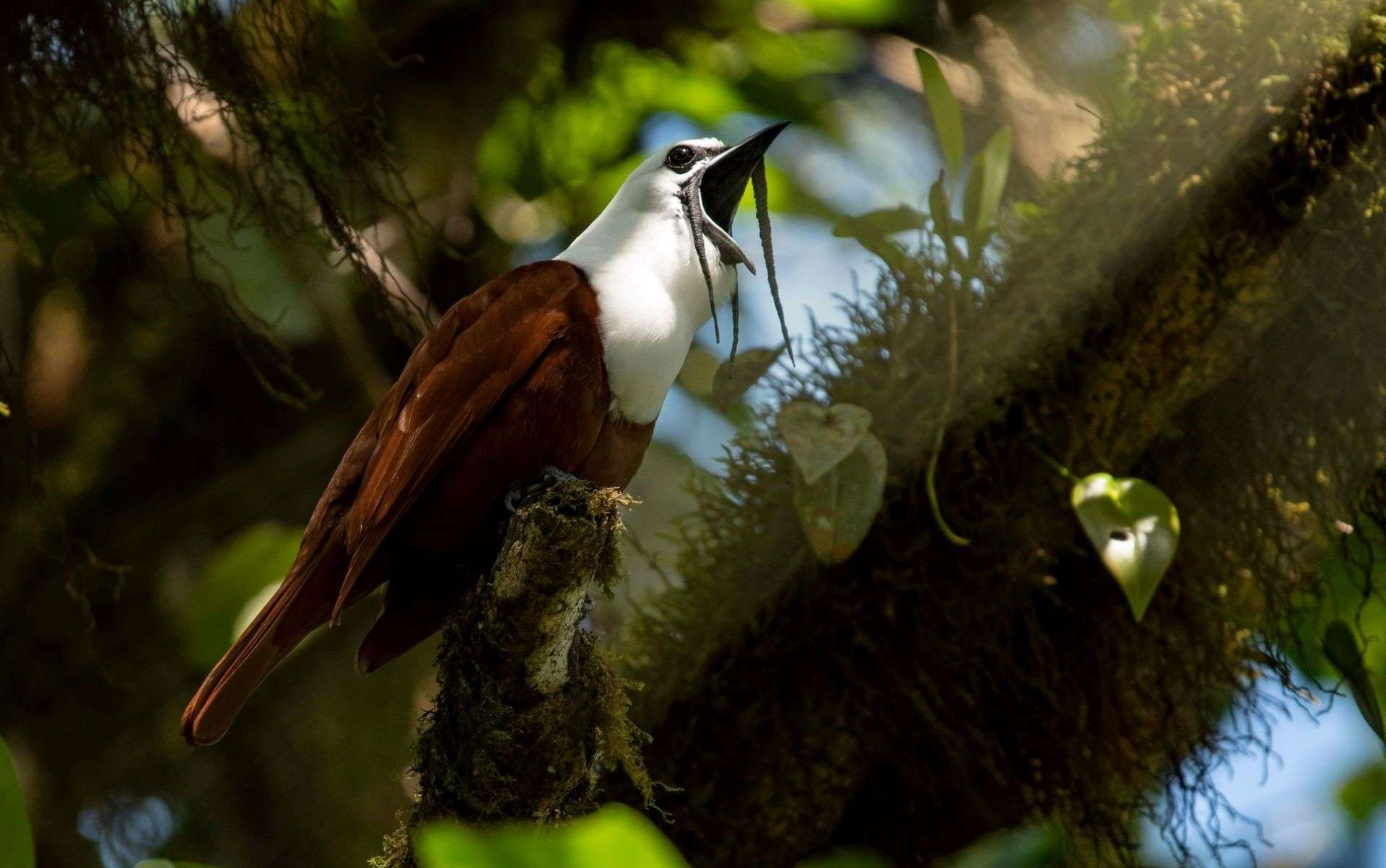
Three bird bell
The Monteverde Cloud Forest Reserve was established in 1972 and now encompasses more than 35,000 acres, surrounded by pristine and remote beaches on both the Pacific and Caribbean. It consists of eight life zones, more than 100 species of mammals, 400 species of birds and 1,200 species of amphibians and reptiles. Six types of cats live here: jaguars, ocelots, puma, oncilla, marginis and jaguarundi. Here, too, the endangered three-ribbed bell bird and the resplendent quetzal nest. Supporting 2.5% of Earth's biodiversity over landscapes of rainforests, misty mountains, flowing rivers, and active volcanoes, Monteverde is home to many indicator species, meaning that they are sensitive to environmental changes and can raise a symbolic red flag when the ecosystem is threatened.
Monteverde's proximity (a three-hour drive) to San Jose, Costa Rica, is one of the most attractive aspects of the rainforest for nature-centric travelers. With more than eight miles of trails available to explore, the reserve makes room for intensely authentic experiences like the ones you can get at our site. Costa Rica's Natural Gems Nature Journey.
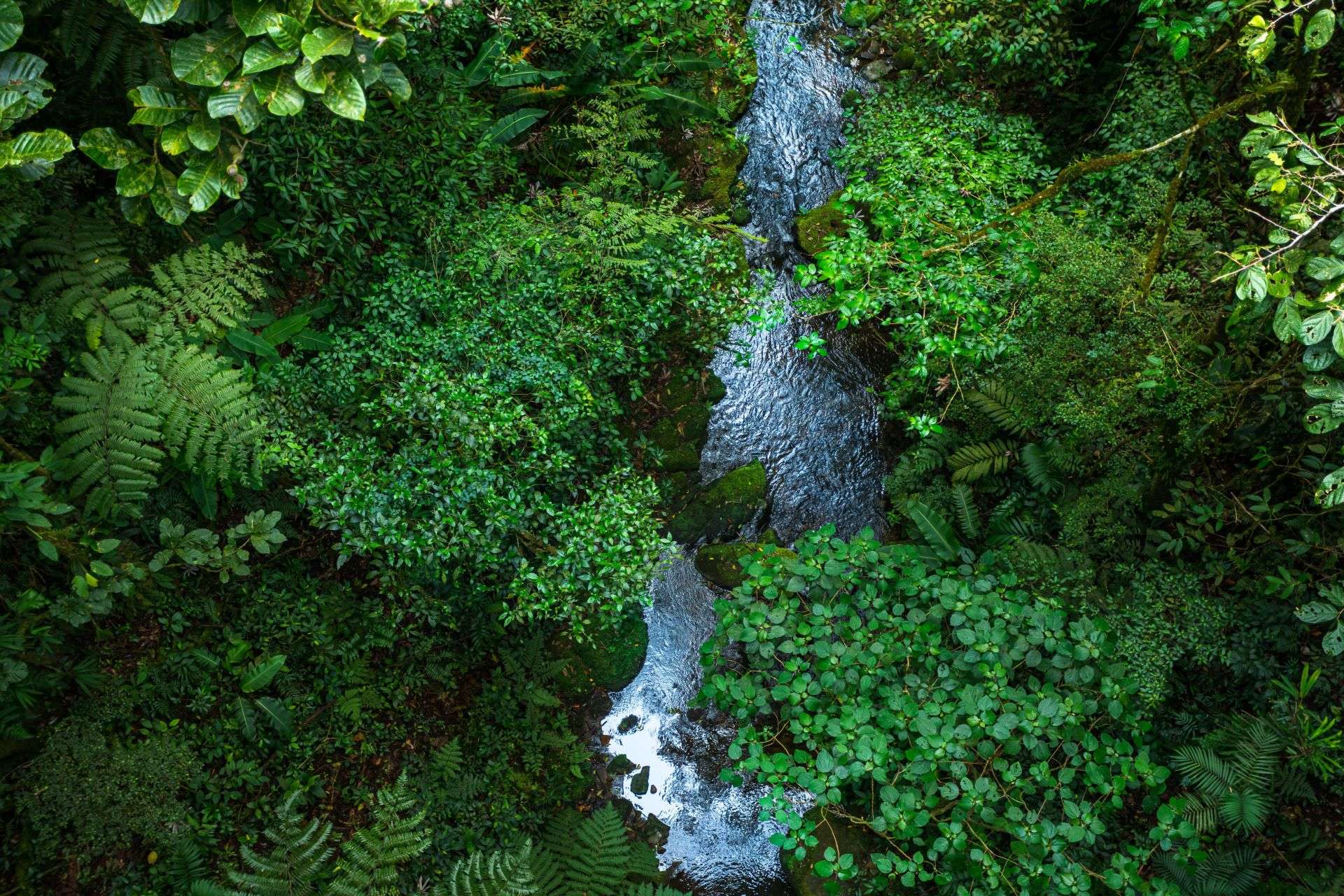
Wildlife in Monteverde Cloud Forest
As you venture into this cloud forest in Costa Rica, you will likely be rewarded with glimpses of spiders, howlers, squirrel monkeys, sloths, tree frogs, and anteaters. There are plenty of birds, from the striking quetzal to the tiny hummingbird. By the sea, you can see green sea turtles and leatherback turtles crawling on the beach at night to lay their eggs. Here is just a taste The wonderful wildlife that Monteverde holds in store.
sparkling quetzal
With its shimmering green plumage, the resplendent quetzal manages to blend in with the emerald canopy of the cloud forest yet stands out with its iridescence. Look closely: the quetzal is brown, not green — so ephemeral in its coloration, in fact, you can't put your finger on it. Other birds in the rainforest rely on quetzals to disperse seeds, which they do by swallowing whole fruits like avocados and vomiting pits on a large scale. The best time to view the Monteverde Cloud Forest Reserve is during the quetzal breeding season from mid-February to June or July.

Anteater
Flicking their long tongues in and out in search of rainforest termites and ants, small, bulbous, tree-eating anteaters are also known as tamanduas. They live in the lowland and mid-altitude habitats of Costa Rica. The giant anteater is a rare sight, but if you see one, you'll know it by its massive bushy tail and unique coat. Look to the trees for the silky nocturnal anteater, which clings to the branches with its semi-graspable tail.
Capuchin . monkey
Named after the brown robes worn by a group of monks called the Capuchin (the distinctive robes coming down on their eyes), the Capuchin monkey has a dark body and crown that frames its stunning white face. If they are not wandering around to get food, they are usually found napping. Look for them in groups of up to 35, led by an alpha male and an alpha female.
caiman / crocodile
Look for the caiman, a smaller cousin of the crocodile, which hangs out on the banks of freshwater river habitats, in mangrove swamps and in some saltwater environments. They are mostly found in the lower wetlands of Costa Rica on the ocean coasts. One of the most common and smallest of all crocodiles, the spectacled caiman is 3.9 to 6.6 feet long.
Howler monkeys and squirrel monkeys
The cloud forest comes alive every morning at the call of a howler monkey, as the males greet another day - and each other - with ringed sounds reminiscent of the thunderous roar of a lion. The screams of these bearded animals can carry a distance of up to 3 miles. You'll hear it again at dusk, or any time during the day when a trespasser gets very close to their land, which ranges from 3 to 25 acres. If you see one howl in the middle of the howl, note the throat, i.e. balloons outward inflated and echoing. The feminine appeal is more of a roaring noel or a groan. The sound of a howler monkey is one of the loudest sounds ever made by any land animal. The most abundant monkey species in Central America and one of the largest of the New World monkeys, the howler is sure to be one of the most spotted animals on your Monteverde trip.
Look for smaller squirrel monkeys in the lowland rainforests of Costa Rica's South Pacific coast. They are very social and gather and travel in groups of 30 or more members. These omnivorous monkeys feed on fruits, insects, lizards, leaves, flowers, nectar, and buds, often foraging alongside capuchins from May through October. The squirrel monkey is active day and night, moving across the forest floor from all sides, protected by the underground bushes from the predators above.
Jaguar
The jaguar has long been a symbol of the Central American rainforest. They rarely appear today, but if you are very lucky, you can glimpse this rich, golden-colored mammal, recognizable by its black rosettes. They tend to live in jungle, savannah, and coastal mangrove habitats. They can reach over 7 feet in length, stand 2 feet at the shoulders and weigh up to 200 pounds.
laziness
Who wouldn't want to catch a glimpse of a slow, leisurely sloth? Cleanliness is not a virtue when it comes to these arboreal animals. Their matted hair is home to parasitic moths, moths, and green algae—all of which work hard to keep sloths camouflaged from predators like tigers and eagles. Look for the three-toed sloth herbivores and the continental two-toed sloth. The former are more active during the day, which makes them easier to spot.
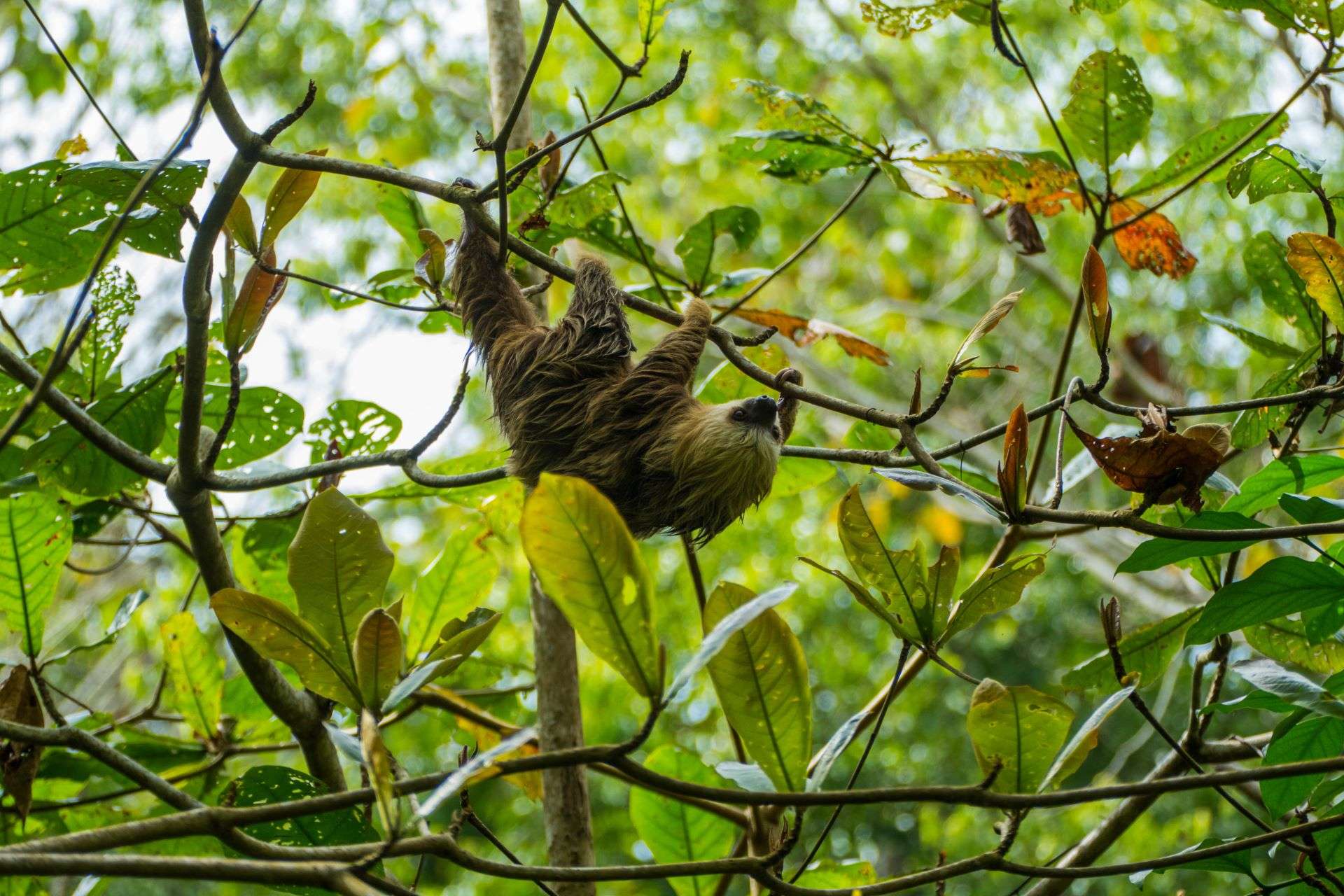
Monteverde Cloud Forest Plants
All that wild, flying, darting, tree-hugging wildlife would never exist in Monteverde were it not for the plant life that thrives here too. The cloud forest serves as the land of nature and is home to a huge amount of biodiversity of plants, especially plants known as air plants. These plants grow on other plants without harming them, absorbing moisture and nutrients from the air, rain, and debris around them. With their unique climates and specialized ecosystems, cloud forests are also host to many types of endemic plants. This is the place to see plants and flowers that you don't see at home and to add another level of appreciation to the amazing display of life that exists in Costa Rica. Look out for these exotic plants among the nearly 2,500 species that thrive here (including giant strangler fig trees!).
mini orchids
It is best seen in the Monteverde Orchid Garden, where you can appreciate its delicate beauty through a magnifying glass. There are over 460 species to examine, along with a knowledgeable Nat Hab Trekking Leader who can explain their growth process.
Bromeliades
The colorful bromeliads are especially hard to miss. Like many plants in Monteverde Cloud Forest, bromeliads are sunny plants that stick to tree branches and add to the forest's lush landscapes. Frogs often lay their eggs on bromeliad leaves, which are the perfect form for water retention.
lichen
Don't lose sight of the humble lichen! This is the lifeblood of the cloud forest, adding another layer of green and providing food, cover, and nesting material for birds, mammals, and insects.
Passiflora
This flowering vine, of which there are hundreds of species, often produces fruit (passion fruit, anyone?), but it's the flowers you'll notice first: wide-open petals with crown-like filaments.
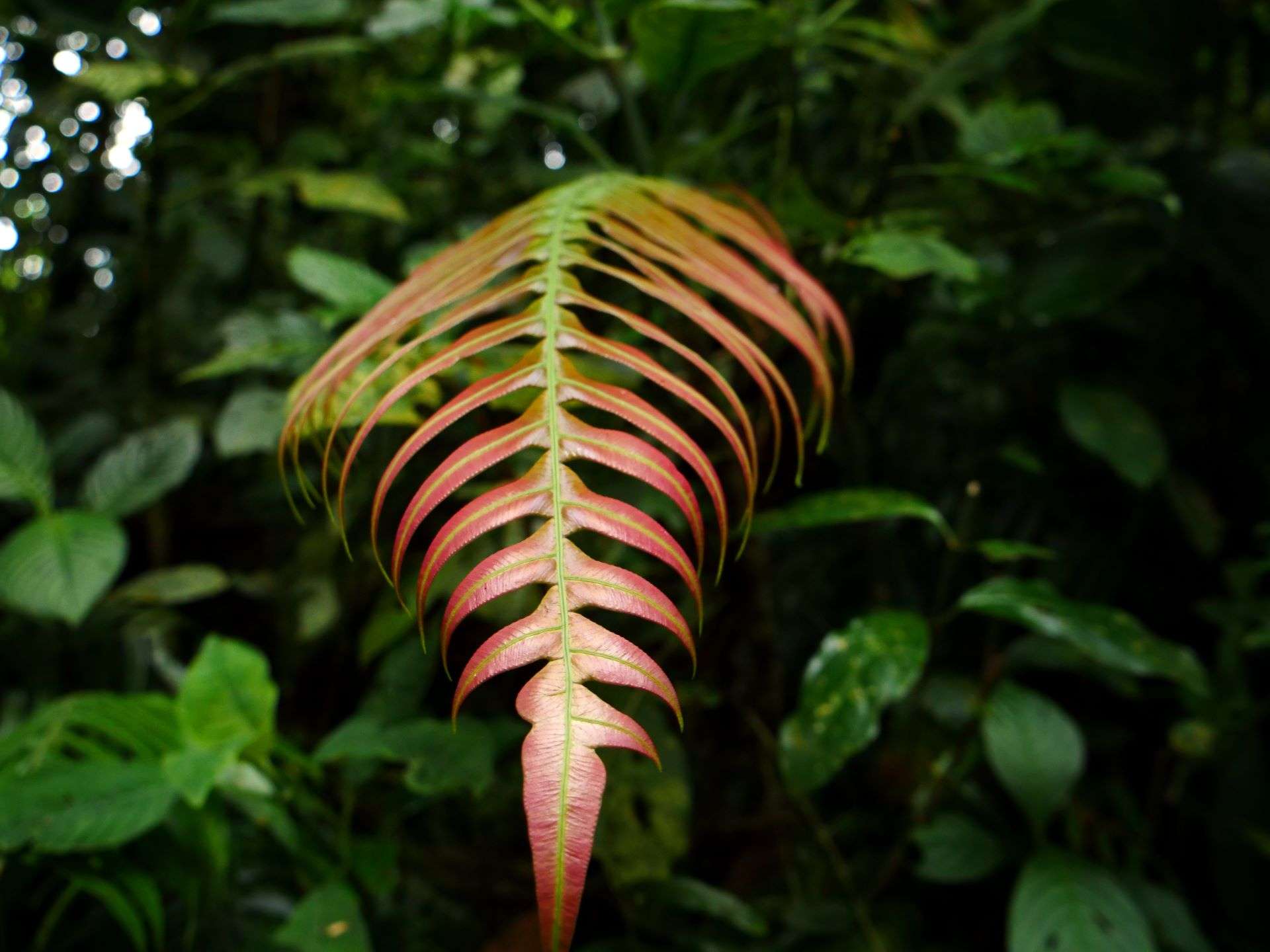
Preserve the cloud forest
According to an international study led by the Swiss Federal Institute for Forest, Snow and Landscape Research (WSL) and published on April 30, 2021, in the journal Nature Ecology and Evolution, "...Despite conservation efforts, up to 8% of some [tropical cloud] Forests have been lost in the past 20 years due to logging and small-scale farming.” This percentage includes cloud forests located in 60 countries around the world. Satellite data shows that between 2001 and 2018, approximately 2.4% of the total area of cloud forests on Earth was lost .
In addition to human factors, climate change is also the cause. The base of the cloud continues to move down or up depending on a particular area, which leads to a loss of water supply. The WSL states that about 40% of the loss occurs even in protected areas.
“Tropical cloud forests are perhaps home to the largest concentration of terrestrial species in the world. These areas, already small and fragmented, continue to lose their area, with devastating consequences for diversity,” says Walter Getz, co-author of the study and director of the Yale Center for Biodiversity and Global Change in the United States. Biology and its functions.
In Costa Rica, specifically, the System of Special Reserves and Biological Corridors (SIREP) established in Monteverde is being successfully extended to other cloud forests in the country to conserve key ecosystems. Finally, the program protects 11,120 acres of cloud forest, lowland rainforest, and transitional dry forest. The Center for Tropical Sciences, Costa Rica's first environmental non-governmental organization, was established in 1962 and works to maintain and sustain research efforts, promote ecotourism, and develop sustainable initiatives to protect the Monteverde Reserve, as well as other private reserves and biological corridors in Costa Rica.
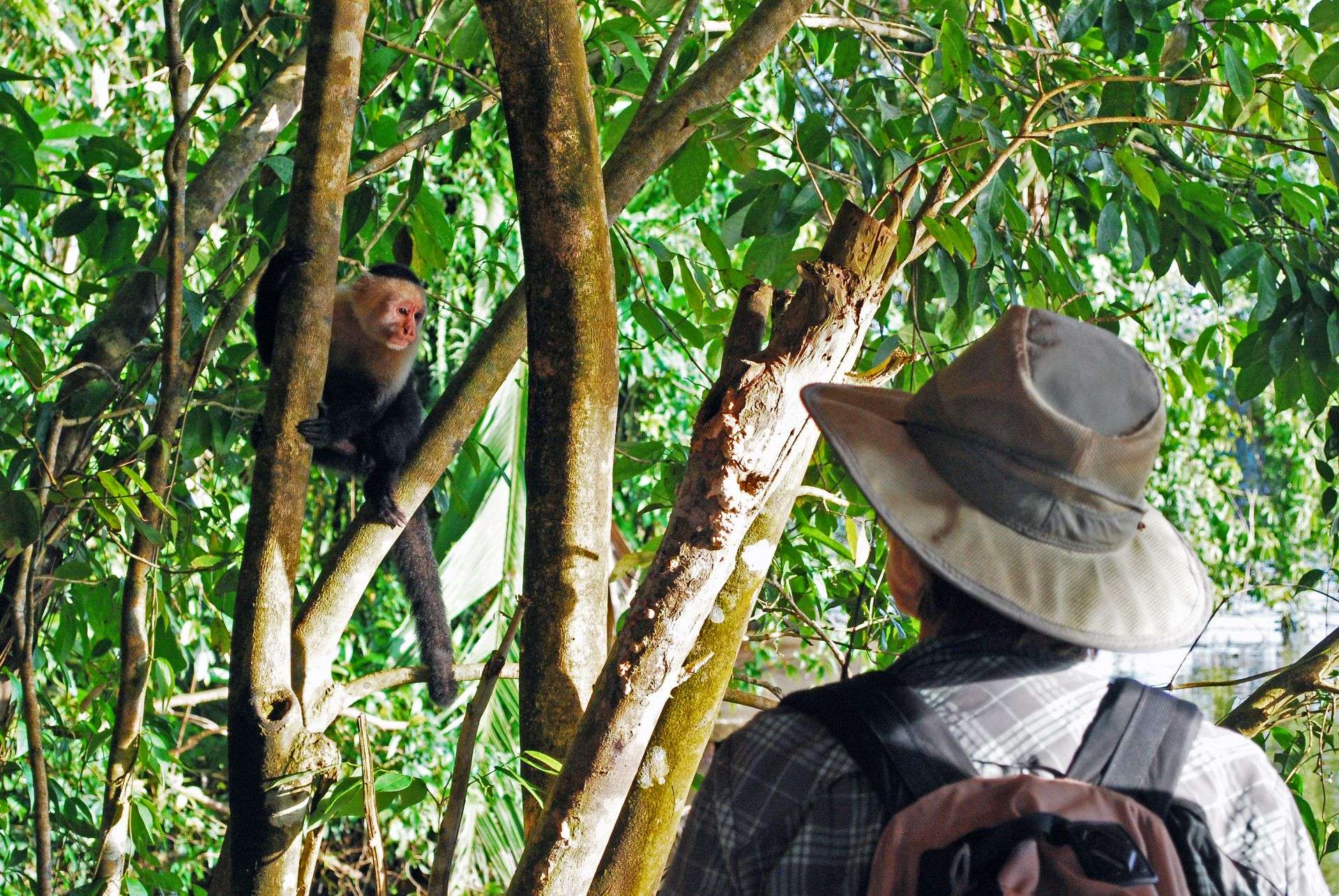
Capuchin monkey. © Megan Quillmay
One way you can help support the Monteverde Cloud Forest is with thoughtful, green travel with a tour company like Natural Habitat Adventures. We'll take you right into the heart of Monteverde for a canopy walk and to explore ferns, orchids and giant strangler figs. We will meet a great variety of birds in Kuri-Kancha Reserve, where 50% of the land is virgin forest, with the rest being restored to original forests from pastures in recent decades. We'll be watching the resplendent quetzal, the three-cushioned bell, the ocelot, the white-faced capuchin monkeys, the armadillo, and much more in the world's most studied mountainous cloud forest environment.
We also visit Corcovado National Park on the Osa Peninsula, home to the densest concentrations of scarlet macaws, tapirs and jaguars in Central America, as well as some of the largest trees in Costa Rica. You'll gain a deep respect and dedication to preserving one of the world's most threatened ecosystems.
Source link